
Mastering DSLR Photography: A UK Beginner's Journey
Trending Now: 404
Reading Time: 17 minutes | Comprehensive Guide | Expert Insights
Welcome to the world of DSLR photography, where creativity knows no bounds and the art of capturing life's precious moments is a journey like no other. As a beginner in the UK, you're about to embark on an exciting adventure, and we're here to guide you every step of the way. With the rise of digital photography, it's easier than ever to get started, but mastering the craft requires patience, practice, and a willingness to learn. In this article, we'll delve into the world of DSLR photography, exploring the fundamentals, sharing real-world stories, and providing actionable tips to help you improve your skills.
Introduction to DSLR Photography
Understanding the Basics
DSLR photography is all about capturing high-quality images using a digital single-lens reflex camera. These cameras offer manual controls, allowing you to adjust settings such as aperture, shutter speed, and ISO to achieve the desired effect. With a DSLR camera, you can experiment with different lens types, including wide-angle, telephoto, and macro lenses, to capture a wide range of scenes and subjects.Choosing the Right Equipment
When it comes to choosing the right equipment, it's essential to consider your budget, skill level, and personal preferences. As a beginner, you may want to start with a kit lens, which typically includes an 18-55mm lens and a camera body. However, as you progress, you may want to invest in additional lenses, such as a prime lens or a zoom lens, to expand your creative possibilities.Setting Up Your Camera
Before you start shooting, it's crucial to set up your camera correctly. This includes adjusting the white balance, metering mode, and autofocus settings to ensure you capture the best possible image. Take some time to familiarize yourself with your camera's menu system and experiment with different settings to find what works best for you.Understanding Exposure
The Exposure Triangle
The exposure triangle is the foundation of DSLR photography, consisting of aperture, shutter speed, and ISO. Understanding how these three elements interact is crucial for capturing well-exposed images. Aperture controls the amount of light entering the lens, while shutter speed determines the length of time the camera's shutter is open. ISO, on the other hand, affects the camera's sensitivity to light.Mastering Aperture
Aperture is a critical component of the exposure triangle, and mastering it can make a significant difference in your photography. A large aperture (small f-stop number) creates a shallow depth of field, while a small aperture (large f-stop number) produces a deeper depth of field. Experiment with different aperture settings to achieve the desired effect in your images.Working with Shutter Speed
Shutter speed is another essential aspect of DSLR photography, allowing you to freeze or blur motion. A fast shutter speed (1/1000th of a second or faster) is ideal for capturing sharp images of moving subjects, while a slow shutter speed (1 second or slower) creates a sense of motion and blur.Composition and Creativity
The Rule of Thirds
The rule of thirds is a fundamental principle of composition, dividing the image into thirds both horizontally and vertically. Placing important elements along these lines creates a more balanced and visually appealing image. Experiment with different composition techniques, such as leading lines, framing, and symmetry, to add depth and interest to your photos.Experimenting with Different Genres
DSLR photography offers a wide range of genres to explore, from landscape and portrait to street and wildlife photography. Don't be afraid to try new things and experiment with different styles to find what works best for you. Remember, practice is key to improving your skills and developing your unique voice as a photographer.Post-Processing and Editing
Post-processing and editing are essential steps in the photography workflow, allowing you to enhance and refine your images. Lightroom and Photoshop are popular editing software options, offering a range of tools and features to help you achieve the desired look. Take some time to learn the basics of editing and experiment with different techniques to improve your photos.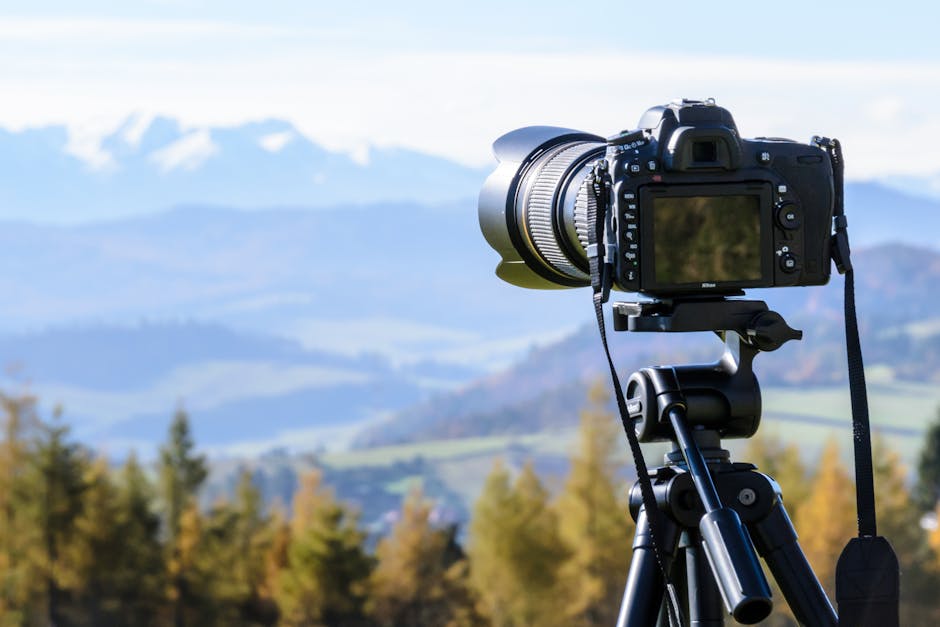
Overcoming Common Challenges
Dealing with Low Light
Low light can be a significant challenge for DSLR photographers, but there are several techniques to overcome it. Using a tripod or monopod can help stabilize the camera, while increasing the ISO or using a wide-angle lens can also improve low-light performance. Don't be afraid to experiment and find what works best for you in different lighting conditions.Managing Camera Shake
Camera shake can be a frustrating issue, especially when shooting handheld. To minimize camera shake, use a fast shutter speed, image stabilization, or a remote shutter release. You can also try bracketing your shots, taking multiple images at different exposures to merge later.Avoiding Common Mistakes
As a beginner, it's easy to make mistakes, but being aware of common errors can help you avoid them. Overexposure, underexposure, and incorrect white balance are common issues that can be easily fixed by adjusting your camera settings or using exposure compensation.Advanced Techniques
Mastering Focus
Mastering focus is a critical aspect of DSLR photography, and there are several techniques to achieve sharp images. Autofocus modes, such as single-shot and continuous, can help you track moving subjects, while manual focus allows for more precise control. Experiment with different focus modes to find what works best for you.Working with Flash
Flash can be a powerful tool in DSLR photography, adding depth and dimension to your images. External flash units offer more flexibility and control than built-in flash, allowing you to bounce or diffuse the light for a more natural look.Creating Panoramas
Creating panoramas is a fun and creative way to capture wide-angle scenes. By taking multiple shots and stitching them together using software, you can create stunning panoramic images that showcase your surroundings.
Conclusion
Mastering DSLR photography takes time, patience, and practice, but with the right guidance and resources, you can improve your skills and capture stunning images. Remember to experiment with different techniques, genres, and styles to find what works best for you. Don't be afraid to make mistakes – they're an essential part of the learning process. With persistence and dedication, you'll become a proficient DSLR photographer, ready to take on any challenge and capture life's precious moments with ease.Actionable Tips:
- Start with the basics: Understand the exposure triangle and practice using different aperture, shutter speed, and ISO settings.
- Experiment with composition: Try different composition techniques, such as the rule of thirds, leading lines, and framing.
- Practice regularly: The more you practice, the better you'll become at capturing stunning images.
- Invest in a good lens: A high-quality lens can make a significant difference in your photography.
- Learn to use editing software: Familiarize yourself with Lightroom and Photoshop to enhance and refine your images.
- Join a photography community: Connect with other photographers to learn from their experiences and gain new insights.
- Take online courses or workshops: Continuously learn and improve your skills with online resources and workshops.
FAQ:
- What is the best DSLR camera for beginners?
- How do I improve my photography skills?
- What is the exposure triangle?
- How do I avoid camera shake?
- What is the rule of thirds?
- How do I edit my photos?
- What is the best way to learn DSLR photography?
Found This Article Valuable?
Share it with your network and subscribe for more expert insights!
Important Disclaimer
This article is provided for informational and educational purposes only. Always conduct thorough research and consult with qualified professionals before making important decisions.
Related Topics You Might Like
- 404
Comments
Post a Comment